
Successful Treatment of Rhinosinusitis

|
S. Mark Overholt
|
We’ve all experienced the headaches, stuffiness, sneezing, itchy and watery eyes, and constant drainage of a sinus infection.
What most people call the common cold, but doctors call rhinosinusitis, usually goes away within a week to 10 days and you’re back to normal.
When rhinosinusitis doesn’t go away within 10 days, a different approach to its treatment is necessary.
In this article, we’re going to provide you with a better understanding of rhinosinusitis as well as appropriate and successful treatment options to deal with it.
Defining Rhinosinusitis
Acute rhinosinusitis (ARS) or acute viral rhinosinusitis (AVRS) involves symptomatic inflammation of the nasal cavity and paranasal sinuses. The term is preferred over “sinusitis,” because it is a form of sinusitis that occurs concurrent with the inflammation of the nasal mucosa.
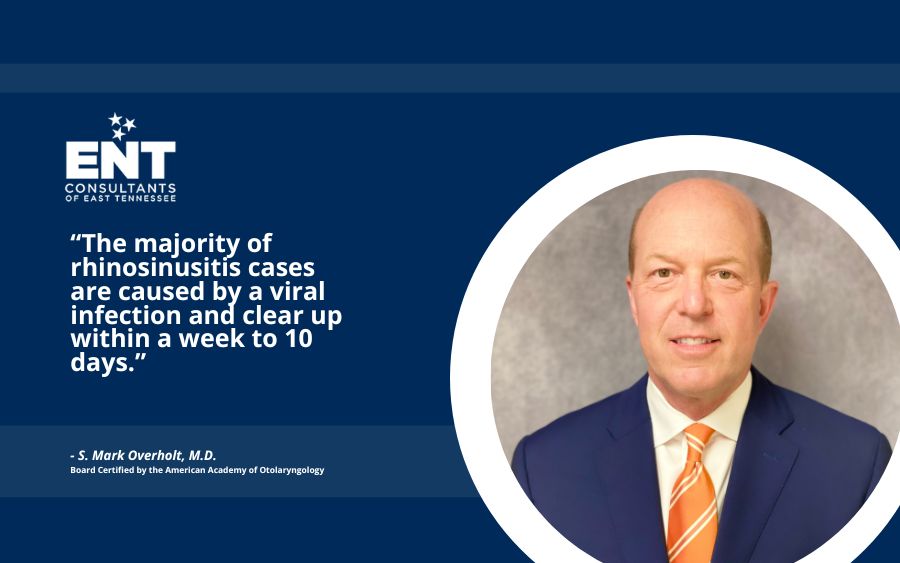
The condition is considered acute if it lasts for no longer than four weeks. The majority of rhinosinusitis cases are caused by a viral infection and clear up within a week to 10 days.
If the condition does not clear up within that time frame, treatment for acute bacterial rhinosinusitis (ABRS) is necessary. ABRS only appears in between 0.5 and 2 percent of the total number of rhinosinusitis cases.
In the majority of cases associated with either AVRS or ABRS, patients do not develop any serious complications. To classify cases of this type, doctors use the term “uncomplicated rhinosinusitis.”
Treatment Options for Acute Viral Rhinosinusitis
Doctors typically focus on symptomatic management of rhinosinusitis during the first seven to 10 days of the condition. The symptoms addressed are nasal obstruction (congestion), rhinorrhea (runny nose), headaches, fever, and fatigue.
Symptom management usually includes:
Analgesics and antipyretics (NSAIDs) and acetaminophen for pain and fever relief, available over the counter
Saline irrigation using buffered, physiologic, or hypertonic saline is used to reduce the need for pain medication and improve overall patient comfort and typically causes few, if any, minor adverse effects
Intranasal glucocorticoids (for patients with underlying allergic rhinitis) are designed to decrease mucosal inflammation for improved sinus drainage
Intranasal saline spray, sometimes used in combination with intranasal glucocorticoids, helps to moisturize and loosen secretions
Oral decongestants (three- to five-day use) can help with Eustachian tube dysfunction, which can be a factor for patients with AVRS
Intranasal decongestants, which use oxymetazoline, may provide a subjective sense of improved nasal patency, but they can also provoke mucosal inflammation if used more than three days consecutively
Antihistamines are frequently used for symptom relief for their drying effects, but over-drying of the mucosa may lead to further discomfort
Steam inhalation or “tenting,” which involves using steam with or without eucalyptus leave or various essential oils, may provide patients with a transient sense of relief of congestion, but it is not likely to shorten the duration or severity of symptoms
Treatment Options for Acute Bacterial Rhinosinusitis
Unless your condition worsens, your doctor will probably wait a week to 10 days before entertaining the idea that you are dealing with bacterial rhinosinusitis, because it only shows up in 2 percent (or fewer) of cases.
When ABRS is suspected, your doctor will continue with symptom management but will add antibiotics to your treatment. Either amoxicillin or the combination antibiotic amoxicillin-clavulanate are the most common antibiotics prescribed for treating bacterial rhinosinusitis.
Amoxicillin in doses of 500 mg orally three times daily or 875 mg orally twice daily over a course of three to five days is commonly prescribed for those without risk factors for pneumococcal resistance.
Amoxicillin-clavulanate in doses of 500 mg/125 mg orally three times daily or 875 mg/125 mg orally twice daily over the course of three to five days may be prescribed for those with risk factors for pneumococcal resistance.
Patients who have an allergic reaction to penicillin may be prescribed one of various alternative antibiotics like:
Doxycycline (100 mg orally twice daily or 200 mg orally daily)
Oral cephalosporin (cefixime 400 mg daily or cefpodoxime 200 mg twice daily)
Respiratory fluoroquinolone (levofloxacin 750 mg or 500 mg orally once daily or moxifloxacin 400 mg orally once daily)
What Happens When Treatments Don’t Work?
If rhinosinusitis does not respond to any of the above treatments or if your condition improves but you have frequent relapses, your doctor will begin to explore complications and other conditions associated with sinusitis.
At that point, cultures, CT scans, and other diagnostic methods—along with more aggressive treatments, which can include surgery—begin to be considered.
Dealing With Rhinosinusitis at ENT Consultants of East Tennessee
Rhinosinusitis is uncomfortable and frustrating to deal with, but in the vast majority of cases, it clears up within a week to 10 days. During that time, OTC solutions to help manage symptoms are our priority.
Should your condition worsen or continue for more than a week to 10 days, ENT Consultants of East Tennessee can provide antibiotic solutions as well as begin to explore additional avenues of treatment if your condition does not improve after antibiotic use.
Click here to contact us if you need help dealing with acute rhinosinusitis or an ongoing sinus condition, and a member of our team will contact you to answer your questions or help you schedule a consultation.
Don’t want to wait? Call us at (865) 693-6065.